The lyrics reference the impacts of the war on people, place and the environment - the three elements of geography.
This week we have seen oil very much in the news....
Here is the song being performed by Martin Carthy and David Swarbrick. I have seen this song performed by Martin in Norwich.
I was reminded of a link when I watched the local Look East evening news programmes in the week.
It featured someone from a company called Boiler Juice. I order my heating oil from this company.
Thousands of people living in rural East Anglia, and other locations such as Northumberland rely on heating oil. I live in one of those households. I had recently had a delivery of 500 litres, which should take us through into the summer months all being well. We use this for our heating and hot water. There is no gas in the village (although that is apparently at a premium as well), and limited options for solar and heat pumps too. Being a village with limited public transport - 20 miles from the nearest train station and having to commute to work I will also be paying more for petrol to get to school.
The price of heating oil has more than doubled in the last few days. I did a little quote on Boiler Juice and it showed the price spike. Heating oil, like jet fuel, is kerosene-based. Both are traded on European wholesale markets which depend on Gulf oil travelling through the Strait of Hormuz, which has now been closed by threats from Iran.
Unlike electricity and gas supplies, there is no price cap on oil.
According to latest Census figures, 865,000 homes in England and Wales – mostly in eastern England, Wales, the north-east and the west country – 127,000 in Scotland and 380,000 in Northern Ireland are affected.
This is as nothing of course compared to the impact of the current war, started for no good reason, which has already claimed hundreds of civilian lives, including the teachers and students at a school....
The music was stripped back, and there were acoustic performances in a number of unusual venues.
The band undertook a series of free, unannounced concerts in iceland. they hauled 40-plus people round 15 locations to the furthest flung corners of their homeland for their debut venture into live film, to create something inspirational.
On their way they went to ghost towns, outsider art shrines, national parks, small community halls and the absolute middle-of-nowhere-ness of the highland wilderness, as well as playing the largest gig of their career (and in icelandic history) at their homecoming Reykjavik show.
‘Heima’ (icelandic for “at home” or “homeland”), truly, shows Sigur Rós as never before. whereas seeing the group live is normally a large-scale and sometimes overwhelming experience, making full use of lights and mesmeric visuals, ‘Heima’ was always intended to reveal more of what was actually going on on stage. it does this via long-held close-ups and a rare intimate proximity, without ever once breaking the spell.
Loosely based on a documentary format – and including personal reflections from the band – ‘Heima’ also serves as an alternative primer for Iceland the country, which is revealed as less stag destination-du-jour and more desolate, magical place where human beings have little right to trespass.
'Heima’ was directed by Dean Deblois, a long-time fan of the band and director of the Oscar-nominated animated feature ‘Lilo & Stitch’, using an Icelandic crew.
MIKLATUN, REYKJAVIK: The largest of the concerts in question took place in this small park in Reykjavik city. Miklatun is better known locally as Klambratun and is also location of Kjarvalsstadir Art Museum.
ASBYRGI, HUSAVIK: A fantastic arena for a concert and everything else for that matter. Asbyrgi sits in a very peculiar depression in the landscape and offer excellent shelter from winds from particular directions. Surrounded by a half-moon shaped cliffs up to hundred meters in height this is one of the absolute must-stops in the country.
DJUPAVIK, HOLMAVIK: This was perhaps the most intimate of the concerts in question. Population of Djupavik is zilch, nill and not much there but an abandoned fish factory which has been partly turned into a summer hotel. This is very much off the beaten track of most travelers but that might appeal to many too.
OLAFSVIK, OLAFSVIK: The tiny village of Olafsvik may not look or offer much but this was the location of one of Sigur Rósar concerts. The routes into town are very scenic and the magnificent, if disappearing, Snaefellsjokull glacier towers above.
ISAFJORDUR, ISAFJORDUR: Isafjordur town is the largest place found in the Westfjords of Iceland and as such pretty lively. Straight across from the bay is the nature preserve Hornstrandir which is one of the very finest places in the country.
SEYDISFJORDUR, SEYDISFJORDUR: A tiny village in the East of Iceland with majestic mountains formed all around it. This is the current summer stop of the only passenger ferry sailing regularly to Iceland.
KARAHNJUKAR, EGILSSTADIR: This is way up in the highland close to where the huge Karahnjukar dam stands. Protesting the dam was one reason why they played here and funnily enough, next to a dam, totally without electricity.
OXNADALUR, AKUREYRI: Oxnadalur valley is a spectacular valley you drive through on your way to or from Akureyri in the North of Iceland. Some of Iceland´s most jagged peaks join any traveler here for and below a river runs through it. This is also the birthplace of one of Iceland´s most famous poets.
The Underfall Yard is actually linked to Isambard Kingdom Brunel.
The 23 minute title track, "The Underfall Yard", is a song about Isambard Kingdom Brunel and the great Victorian engineers. The Underfall Yard itself is located in Bristol and is an engineering solution, partly developed by Brunel, to maintain water and silt levels in the city's harbour.
The song explores Enlightenment themes, contrasting the rationalism of the Victorian era to a coming 'age of unreason'.
The Underfall Yard was initially inspired by Richard Fortey's The Hidden Landscape.
In the book, Fortey describes a journey along Brunel's Great Western line, where, as the author travelled west, the rocks are found to be older.
Videos have been filmed from cars driving through cities around the world. You can listen to music on the local radio station or in the car, and also opt to hear the background sounds as well, which include the engine and street noise, sat-nav instructions etc.
This site has more cities and different versions of the city in some cases than an earlier version, with multiple videos of some. There are hundreds of cities available.
I put Reykjavik on the screen during an Open Day at my school and enjoyed watching a car following familiar roads from trips there.
There are some fascinating cities to drive through. Think about the impression that you get from the views of one vehicle. Which part of the city has been chosen to represent the city? Does the route go past the 'nicest' parts or the Central Business District? Has it been selected to avoid the busiest intersections where the car might end up standing still for some time in queues? Can you work out where in the city it is with the help of mapping or StreetView (if available).
Try Sana'a in Yemen for example for an interesting cityscape. Follow a battered Land Cruiser for a while.
Or Fukushima City with pristine streets, and the wide roads of Abu Dhabi.
There's a few other options such as Doncaster in the rain.
Some videos are higher quality than others. Some of them take place at night time. There is a variety of weather, including the icy streets of Anchorage, the beach side roads of Brazil and Costa Rica, and the distant hills that can be seen outside of some cities.
You can also opt to walk or cycle through the city and there are other options down the right hand side of the menu, which can be closed and the site put on full screen to avoid distractions.
The speed at which you travel can also be controlled....
There are some different ways this could be used with with groups, and I can imagine some sort of analysis or comparison of two cities in different parts of the world to compare the buildings, infrastructure, standard of driving etc. Also look out for signs of globalisation on billboards.
While the vehicle drives through the city, you can also tune in to a local radio station and hear what is playing in the car as it drives through the city.
The latest guest blog post from Carl Lee heads to the deep south of the USA - but not in person.
Tremé
New Orleans, Louisiana.
Three months after.
Antoine Baptiste is running to catch up a second line band in the Tremé, trombone in hand. He has got himself a gig standing in for Trombone Shorty. When he arrives after explaining himself to the band he hollers “play it for the money boys, play it for the money” and they break out into ‘Feel like funking it up’.
And so opens Treme the HBO drama that premiered in April 2010 - not quite five years since Hurricane Katrina hit the city of New Orleans resulting in destruction and the loss of over one thousand lives.
The Tremé, the oldest African American neighbourhood in the USA, and is just north of the famous French Quarter, and it took the full force of Hurricane Katrina but survived serious flooding because it is on higher ground. Treme the television drama is the story of how the residents of the Tremé tried to rebuild their lives three months after America’s most destructive hurricane to date.
Treme spans four series and 36 episodes and if you have never watched it you are in for a real treat; it is American drama at its absolute best. Not that should be surprising given that it was created by David Simon and Eric Overmyer who were also responsible for ‘The Wire’, a series often cited as the best American television drama ever created. It had pedigree.
Here's that opening scene.
Treme is as much about a place as it is the people that live in that place and call it home.
It was in the Tremé that free people of colour first lived in American and as Wendell Pierce, who plays Antoine Baptiste, explains, “In Tremé captured Africans could listen to the music of European brass bands and they combined those two sounds into jazz. Um pah pah turned into um…pah a douba douba douba boom boom yeah”.
So the Tremé, a working-class inner suburb of New Orleans, was effectively the birthplace of jazz and unsurprisingly it seeped into the cultural soul of the place.
Nowhere is that more clearly expressed than in the tradition of the second line.
Here at death there is no greater honour at your funeral than to have, after the close family - the first line, friends and neighbours who with a jazz band make up the second line. To the cemetery a dirge is mournfully played but on departure - post the funeral - the band, driven by the drum, kicks up party style, literally funking it up. The cost of the second line was met by the social and pleasure clubs that glued together the working communities of the Tremé.
Although Hurricane Katrina certainly dealt a blow to the Tremé, that was not the event that has been most damaging to this unique culture and community.
That has been urban renewal and the changing demographics of the resident population, partly as a result of gentrification.
In the 2000 Census, 93% of the population of Tremé was Black. By 2020 it was just 58%.
The old working class culture of Tremé, the neighbourhood bars and Black owned business have now been subsumed by fancy coffee houses and packaged ‘jazz and blues’ experiences all projecting a perceived and sanitised ‘authenticity’. The old communities that had developed unique musical and cultural traditions such as the Mardi Gras Indians are increasingly difficult to sustain as long standing member sell up and move out, or are moved on by the city authorities as a response to redevelopment or they have simply aged and died.
In 2010, HBO's Treme captured the freewheelin’ bohemian ‘pioneer’ gentrifiers of the Tremé: the chi- chi gumbo restaurants, the French Quarter clubs and the new wealthy residents and older moneyed dynasties - but also there were the itinerant drug-dependent musicians, the casual street gun crime and the brutality of the city's policing especially during the Hurricane Katrina crisis. It is a moment in time in a place.
Echoes of this culture and sound undoubtedly remain, and New Orleans retains its reputation for the birth-place of Black American music, whether jazz or blues, while Mardi Gras still attracts tens of thousands of people from all over the World.
However, you can save yourself the air-fare, the handing over of your DNA and social media history to the US border control or run the risk of ICE picking you and deporting you, by finding 36 hours to binge watch Treme.
References and reading.
Wendell Pirece’s New Orleans - a tour of the neighbourhood thanks to 'The Guardian'
Tremé: Death of a neighborhood, survival of a culture
Black Masking Indians: A historical New Orleans Carnival tradition
Carl Lee is retired but was a lecturer at The University of Sheffield and Sheffield Hallam University, taught A level Geography for 20 years at Sheffield College, is the author of five books about geography and has a PhD in economic geography. He has been nuts about music since buying his first single in 1973: 10cc’s 'Rubber Bullets' if you were wondering.
Last night, was a wonderful experience down in London. After months of waiting, it was time for my son and I to use our tickets to see David Byrne's current concert tour.
I last saw him playing live over 30 years ago, at Cambridge Corn Exchange, when he played a mix of his own solo songs and some Talking Heads classics.
Image: Alan Parkinson
After a day in London taking in some exhibitions and other activities we headed for Hammersmith and down to the Rutland Arms for pre-show meal - a nice Saharan dust enhanced sunset was taking shape and the riverside pubs were busy.
The show was wonderful. It was all about joy and love, and storytelling... and the choreography of the band and the imaginative staging of each track was excellent.
David Byrne's tour is called 'Who is the Sky?' (who is this guy?)
The Hammersmith Apollo (as I shall continue to call it) was packed, and after the first half an hour or so, people were up dancing. The energy was infectious and the audience's response to the music, the political asides and humour was up there with the loudest audiences I've heard... If you get the chance to see it then take it.
Luckily most people respected the request at the start by David Byrne to 'be present' and limit the videoing and photography.
Videos shot on a phone never capture the full impact of a show like this, and the sound is always terrible compared to the careful mix. The bass and lighting on this track: "Once in a Lifetime" were particularly memorable...
Lyrics referencing groundwater hydrology...
And here's a shot of mine, towards the end of 'Life during Wartime'... another Talking Heads classic, which featured lots of images and videos of ICE and the response to them...
Jarvis Cocker has a close connection with the city of Sheffield, as we discovered on the 1st of March.
He has talked and written at length about this connection.
Carl Lee will also share a blog on Jarvis and his Sheffield connections from his own perspective as someone who has lived in the city for a great deal longer than me.
Sheffield Sex City's lyrics continue, later on in the song, describing sitting on a hill overlooking the city:
And listen, I wandered the streets the whole night crying, trying to pick up your scent Writing messages on walls and the puddles of rain reflected your face in my eyes. We finally made it on a hill-top at four a.m. The whole city is your jewellery-box; a million twinkling yellow street lights.
Here's the track in question:
More musical urbanism also comes from this story from a few years ago which has featured on LivingGeography.
When Jarvis Cocker wrote his lyrics for the Pulp song Wickerman, he was inspired by a real-life journey he undertook through the subterranean rivers in the middle of his home city of Sheffield. And now the evocative verses’ local references – from mentions of Sheffield places The Wicker, Forge Dam, The Moor, Broomhall and The Leadmill to ‘Little Mesters coughing their lungs up’ and ‘the old Trebor factory that burned down in the early seventies’ – mean the composition has been deemed worthy of academic study.
Wickerman formed the basis of a question posed to students sitting exam board AQA’s Geography A-level Paper 2, on Human Geography.
Candidates were shown 13 lines from the song – an eight-minute, part-spoken word epic which featured on We Love Life, Pulp’s final studio album to date, released in 2001 – before being asked to compose a response to a specific brief.
Stacey Hill, head of curriculum for geography at AQA, said:
“The question was on how external factors such as art can influence a person’s perception of a place, as opposed to how a local person – in this case someone from Sheffield – might feel about their surroundings. The reason we chose the Pulp lyrics was because they fit the purpose for this type of question very well.”
Port Sunlight was a community built by the Lever Brothers for their workers, who made soap.
It was over to Port Sunlight for me and some friends in the late early 1990s - was not sure when exactly, but this WIKI confirms it as 1991 - it shows the venues of Roy's gigs and I remember quite a few of them in the 1990s all over the north of England.
Port Sunlight is a model community and we had a little look round before the concert. It's a beautiful place, and full of social history. The workers were provided with a nice house and a garden where they could grow some of the food they ate. It was created in 1888
I remember the hall - the Gladstone Theatre - being made from wood, and there were lots of signs warning of no smoking, which was hard to maintain when you're seeing Roy Harper back then...
Port Sunlight sits on the banks of the Mersey on the Wirral Peninsula - quite a trek from South Yorkshire for the gig, and named after the main brand of soap. A large number of architects worked on designs to ensure that there was variety in the type and design of houses.
Other similar model villages funded by industrialists are Saltaire and Bournville.
As with Bournville, alcohol wasn't originally provided.
Built in 1900, the Bridge Inn in Port Sunlught was originally a ‘temperance hotel’ that didn’t serve alcohol. This changed when William Lever put it to a vote and the village’s residents decided they wanted a place to enjoy an alcoholic drink.
What's the most unusual venue for a gig that you've ever been to?
It's their most ambitious undertaking yet and even includes vocals from Einstürzende Neubauten leader Blixa Bargeld. It brings the listener to Europe’s heart and de facto capital, the cultural and political metropolis that is the ‘Hauptstadt’ of the Federal Republic of Germany – Berlin.
Walter Ruttmann’s radical Berlin tape-artwork Wochenende (or Weekend), which is sampled on three of Bright Magic’s tracks provides a key aural resource. Created in 1928, the piece collaged speech, field recordings and music into a sonic evocation of the city.
I've always been excited by the work of the band's multi-instrumentalist songwriter J Willgoose Esq. and there is a good geographical connection once again in this album (as there was with 'Everest' and the coal-mining theme of 'Every Valley'.
Combining sound archaeology and the flâneuring of the psychogeographer, one street-level pursuit of the city’s energy involved Willgoose walking the Leipzigerstrasse, site of the city’s first electric streetlight, using a wide-band electromagnetic receiver from Moscow’s Soma Laboratories. “I walked up and down recording electrical currents and interference,” he laughs. “You can hear a few of these little frequency buzzes, clicks and impulses in Im Licht (a song inspired in part by pioneering lightbulb manufacturers AEG and Siemens). It’s what I was trying to do in the wider sense, I suppose – to capture those tiny little pulses you pick up while walking through a city.”
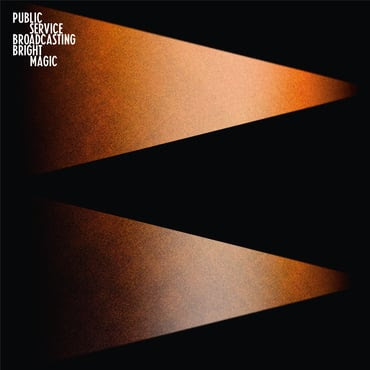
Bright Magic is the latest album from the band Public Service Broadcasting. It is influenced by the city of Berlin, and influenced by 'Metropolis', Kraftwerk, Vangelis, Marlene Dietrich, Weimar era Germany and the history of the city. I was due to visit in 2020 for an ERASMUS trip, but the pandemic ended those plans.
I have blogged about this band and their music many times before. This is another triumph after 'Every Valley' and 'The Race for Space'. The final track embraces the quotidian... with a rendition of a poem by Kit Tucholsky called 'Eyes in the Big City' with vocals by Nina Hoss.
Check out the album on your favourite streaming service...
The electrical hum of the frozen food aisle at the store on Ecclesall Road has been described by fans on social media as "the calmest droning chord ever", a "gong bath" and like the "string section of an orchestra".
Local music technologist Alex McLean was one of the first to notice the unexpected soundtrack and shared his discovery on Reddit. He said: "I was just doing my shopping and walked into the corner where you're surrounded on three sides by these quite big freezers.
"I just felt this sense of calm, surrounded by these really rich tones, it's like a long continuous chord that never ends."
Such noise is part of our everyday geographies.
Dr Will Scrimshaw is a lecturer in popular music technology and composition at the University of Sheffield. He said the supermarket environment is perfect for creating such a distinctive sound.
"You've got a lot of freezers in that area and there's a lot of glass so it's quite reflective and that allows the frequencies to build up, which is why it's so prominent.
"You'll hear it quietly in lots of appliances. Normally if they get a little bit older and they start to develop a few quirks then that can become a bit more prominent.
"I think it's one of those things that once you've heard it you'll start to notice it in your everyday life a little bit more."
Anne Greaves - a former colleague at the Geographical Association - shared this video of a musical performance featuring the freezers.
OSS030 - Improvised performance in the key of C# Major to accompany the hum of the freezers
Musicians featured: Zebedee C. Budworth - Classical guitar + vocals Rob Bentall - Nyckelharpa Hazel Thompson - Clarinet + voice Ruth Webber - Tenor saxophone Sarah Heneghan - Pandeiro + percussion Peter Brooks - Guitar Phoebe Niamh - Harp Sam Weatherald - Clarinet + percussion (khatal) Eleanor Hooper - Vocals Graham McElearney - Harp Mike Smith - Guitar Lou Barnell - Vocals Cal Innes - Melodica Mat Pronger - Trumpet
Outer Spaces is a non profit run by Jamburrito showcasing musicians performing live in unconventional and interesting spaces.
“I wanted to do an exploration of men and their obsessions, and I wanted to do a celebration of people and their hobbies, and a celebration of the English countryside”
Mackenzie Crook, 2015
One of the finest TV programmes of recent times.
The music is very much part of the overall 'package' of the programme. It is by Johnny Flynn.
Here's a reminder of the review I wrote of Jo Norcup and Innes Keighren's rather wonderful book....
"Alright geography degree, where should we be searching?"
I've been waiting for this book for some time, and it's lovely to finally hold it in my hand and flick through its contents before diving in. I didn't quite do a "gold dance" when my lovely postlady left it on the doormat and retreated two metres, but not far off. 'Detectorists' instantly grabbed me when the first episode of the first series was broadcast on the BBC on 2nd of October 2014. The week before I'd watched another wonderful Toby Jones performance in 'Marvellous' about the life of Neil Baldwin, so I was keen to see him in this new series too.
There was something calming about the series as it progressed, with the relationship between Becky and Andy, the banter about 'University Challenge', their random finds and changing relationships. There are so many small moments of joy (many of which make it into the pages of the book)
The random curries made from whatever was in the boxes Lance was unloading with his fork-lift.
The changing dynamic of friendship and relationship with the arrival of Sophie.
The bickering with Simon and Garfunkel.
Mr. Bishop and his phantom dogs.
Sheila's lemonade - the sharpest lemonade on the planet.
The tension-filled pub quiz.
All wonderful vignettes making up a fantastic narrative, and pastoral first series, which was followed by two others. It also had the perfect ending for home-maker Andy and his family. The casting of Diana Rigg as Becky's mum (the actress Rachael Stirling is her daughter) was also a lovely touch.
As I was watching it, Jo Norcup and Innes Keighren were also watching, and later discussing it, and unpicking the themes and identifying a number that were geographical beyond the obvious "sense of place" and "landscape as palimpsest" that were perhaps clearer to the viewer, with the treasures buried just out of sight by people long past. There were also references to reading the landscape, Ordnance Survey maps and Google Earth.
Danebury's OS sheet is reproduced at the start of the book, just as it was glimpsed in the episode where Becky uses her geographical skills to suggest the most likely location for the ship they are seeking. Andrew Harris noticed the connection with verticality: how Andy was always looking at the ground, even when performing, and how he took on jobs whose actions mirrored detecting. They noticed how it was Becky who made the decisions, with gender roles being explored, and how detecting is an act which connects you with the quotidian of yesterday.
Later, Jo and Innes developed their ideas and thinking into a session for the RGS-IBG's Summer conference in 2018. When they published an open call for papers I even started writing one. I visited the filming locations in Suffolk, including Framlingham and Aldham, but didn't get it finished, and it would have been rather less than academic if I had.
I had started to explore how programs like 'Detectorists' can lead to a growth in tourism, with people wanting to visit the filming locations. It also explored how the real place is subtly changed by the film makers, so that its geography is changed. Those living in the place can immediately see the lack of logic to particular scenes when they watch them, those unfamiliar remain blissfully ignorant.
Here's an extract from the RGS session abstract which led to the book:
The BAFTA-winning situation comedy-drama “Detectorists” has, across three series and a Christmas special (2014–17), garnered critical praise for its affectionate portrayal of metal detecting and amateur archaeology in rural England. In its attention to the embodied practice of detecting and to the social worlds of detectorists, the programme has been described by critics variously as “about hardly anything and almost everything” (Lloyd 2015) and “the most accurate portrait of men being men that you’ll find in current popular culture” (Fewery 2015). For one Twitter user (Sumsion 2014), the show is simply “a warm, beguiling, slow-burn meditation on male friendship and prosaic details of Englishness, plus some metal”. Explaining his motivation for creating “Detectorists”, Mackenzie Crook, writer and director of the programme, has said “I wanted to do an exploration of men and their obsessions, and I wanted to do a celebration of people and their hobbies, and a celebration of the English countryside” (Crook 2015).
Jo describes the lead up to the session when they wondered whether they were going to make fools of themselves, but it turned out to be very successful and well received, and the programme's producer, Adam Tandy came along too. Isla Forsyth and Andrew Harris added their own pieces as well.
Following the session, Jo and Innes were approached by Colin Sackett of Uniformbooks and asked if they would like to turn the session papers into a book.
The book is beautifully presented and has the added value of a foreword written by Mackenzie Crook who professes himself surprised at how the 'readings' of the authors of each essay have revealed to him some things he never noticed himself - reminding us how geographers see the world with 'a different view', to add to the views of archaeologists and detectorists to interpret the landscapes of anywhere, not just the Landscapes of Detectorists.
Crook has since turned his talents to a resurrection and new interpretation of ‘Worzel Gummidge’, drawn from similar themes of folk tales blended with warnings of climate change and the seasons being out of balance - other geographical themes. A series is apparently forthcoming.
I appreciated the references to some relevant geographical scholarship and others such as Joe Moran, who has written on the quotidian (a personal interest of mine as well), and Tim Edensor, both of whom also consider the creation of the landscape and the role of artefacts to connect us with the lives of those who have occupied the landscape before. The third series introduced more images of the previous occupants, alongside the family of magpies that have been collecting gold in their nest in the tree beneath which Andy and Lance sit to eat their lunch and reflect on their hobby.
The text is accompanied by plentiful black and white stills from the series.
Reading the book gave me a desire to rewatch key scenes from the series to spot things I hadn't noticed. I'd forgotten one scene at the start of the third series, for example, where the solar farm developers Photon Harvest are talking about a new development and unroll a large aerial photograph on the desk in a London highrise. It shows Church Farm outside Danebury.
The camera zooms down into the landscape, 'Powers of Ten' style, to reveal a yellow TR7 and Lance and Andy walking out to start the day detecting...
Lance looks up, and says: "Look at that, not a cloud in the sky"....
Reading this wonderful book has given me a desire to visit the church at Aldhouse again.
Now that the pubs are open I'll also head for Great Glemham and raise a glass to Innes and Jo in 'The Two Brewers'.
I'm also going to finish off my 'paper' on the landscapes explored in the series. This book is very much a book by and for geographers, for those interested in place-making and cultural geography, such as the sub-culture of detectorists and their practice. It's also about the construction of a narrative which has hidden depths, just as any ploughed field has. One particular field on the edge of the village in Snettisham in Norfolk where I lived for 12 years yielded up a golden treasure which, like Lance's brooch is now on display in the British Museum. https://www.britishmuseum.org/collection/object/H_1951-0402-2
Full disclosure: I was sent a review copy of the book by Colin Sackett of uniformbooks, but would have purchased a copy of my own. And have since. Purchase link is here.
uniformbooks have always been supportive of, and receptive to, geographical thinking, having previously published books featuring the work of former GA President Geoffrey Hutchings and also David Matless. Images: Screengrabs from iPlayer - copyright BBC Thanks to Duncan Willis for the expert car knowledge and subequent correction to an earlier draft :) I referred to Lance's car originally as a TVR, which is also a mistake made by Maggie in the series, as Duncan reminded me. http://downloads.bbc.co.uk/writersroom/scripts/Detectorists-S3-Ep4-Shooting-Script.pdf
And here's Johnny Flynn's excellent theme music, performed live:
And if you haven't caught it yet - catch up with Small Prophets. A worthy successor...
In April 2019 I had the experience of heading for New York. We were going to go for my daughter's 21st but decided to go a year earlier - and it was just as well that we did.
It's just as well that we did, as if we had waited for the following year, COVID would have cancelled our trip, and the USA is temporarily out of bounds.
Last night, my wife was watching the Brit Awards. This is not my type of music, or event generally, but about an hour in there was an amazing performance from Rosalia, who then surprised everyone with a special guest (who featured on the original track providing a small vocal contribution). The ending was different to the original track on her album as well. If you've heard it you'll know.
Stop what you're doing and have a watch of this...
Update - 7th March
A remixed version of the track by Conrad Taylor has been released.... based on the Brits performance.
"Sheffield's my city, it's where I grew up, and although I've moved away for now, I'd like to try and show you around. Sorry if we get lost, it changes every time I come here."
Jarvis Cocker
I'll have to start this set of posts on musical cities by looking at Sheffield, my home city - Rotherham being my home town. Both have some musical connections and bands who were born there or met there, or recorded their albums there... or a combination of those.
At the GA Conference in Sheffield some years ago, I made a Cultural Geography diagram using Mentimeter of Sheffield for a session I was presenting, and this was the outcome from the people who were at the session, suggesting some cultural connections with the city (not all of which were musical) and a really good range of bands.
Pulp played their first gig at Rotherham Arts Centre - somewhere I used to visit regularly as it was inside the Public Library (now sadly demolished to make way for a large Tesco...) to borrow records in the days before streaming and when I couldn't afford to buy LPs all the time.
There's an academic paper that you can read here which explores the origins of the musical styles in 'Steel City'... It does a good job of delving into the musical heritage of the city and the influence of its location and steel-making heritage. The paper is accessible and readable and has lots of interest.
John Schofield & Ron Wright (2021): Sonic Heritage, Identity and Musicmaking in Sheffield, “Steel City”, Heritage & Society, DOI: 10.1080/2159032X.2021.1968227
I'll be sharing more insights from this paper in other blog posts. I've previously talked about the importance of geographers reading out of field research to help inform their own work.
I'll be back in Sheffield at the GA Conference to share this blog too... perhaps see you there?
So how about my own musical experiences and memories of Sheffield?
There are a number of music venues which stand out.
One of them was the Leadmill which was closed in 2025, and all signs of it removed hastily. I wasn't one of those who saw Nirvana there sadly.
I did however see Davy Spillane and band there, which was excellent, and also Ivo Papasov and his Bulgarian Wedding Band... check them out.
I saw a lot of folk concerts at the Grapes, including Dick Gaughan - of which more elsewhere on the blog.
The City Hall was the venue I perhaps visited the most - seeing all sorts of classic bands there including rock bands, many of whom are no longer around.
My first concert was at the City Hall. More on that in an early post and with more to come.
There were also bands such as Tangerine Dream, Thin Lizzy, Tori Amos, Def Leppard, Clannad and many more.
The Octagon centre was a venue run by the University, and there were some other concerts in the University Union itself, including several with Roy Harper.
On the edge of the city, close to the World Student Games stadium (where I saw U2 - of which more elsewhere on the blog) was the Sheffield Arena: a reasonable arena acoustically. I saw Peter Gabriel and Rush there on several tours, and also Riverdance.
More on all of those at some stage in the blog.
The city's library archive shared this useful summary:
Sheffield is the home of many well-known bands and musicians including a large number of synth pop and electronic groups such as the Human League, Heaven 17, ABC and Cabaret Voltaire. The pioneering independent record label Warp Records, founded in Sheffield in 1989, has become one of the UK’s most respected dance music labels. Artists such as Pulp, Def Leppard, Joe Cocker, Richard Hawley, Milburn, The Longpigs and Moloko along with many other popular and alternative musicians were born in Sheffield. More recently several indie bands, including Arctic Monkeys and The Long Blondes, have emerged from the city as part of the NME-coined phrase: the New Yorkshire Movement.
Here's Jarvis Cocker's "musical tour of Sheffield"
And here's the Everly Pregnant Brothers' 'You're Yorkshire'...
They also did an excellent song about the 69 bus between Rotherham and Sheffield.
The 69 to Rovvrum
I love the litany of place names near the start which charts the route of the bus.
Pond Street Darnall Attercliffe Brightside Tinsley Templeborough Canklow
This is a bus I used to catch frequently - to and from Sheffield for a night out. We generally headed for the Fat Cat, or the Frog and Parrot, or somewhere along West St. The alternative was the 287, which connected to Wickersley where I grew up.
There were also classic nightclubs like the 'Wap' (the Wapentake - the name for an early division of Yorkshire.
Via Wikipedia.
A wapentake, an Old Norse–derived term as common in Northern England, was the equivalent of the Anglo-Saxon hundred in the northern Danelaw. In the Domesday Book the term is used instead of hundreds in Yorkshire, the Five Boroughs of Derby, Leicester, Lincoln, Nottingham and Stamford, and also sometimes in Northamptonshire. The laws in wapentakes were similar to those in hundreds with minor variations.
A recent band to come through to huge status is Bring me the Horizon. More on those in a future post as well.
Finally, I hope you've been following a whole sequence of guest blog posts from Carl Lee, many of which are firmly grounded in the geography of Sheffield. Check out his books 'Home' and 'So where are you from?'.
And we will finish with another quote from Jarvis Cocker on the difference between living in Sheffield and elsewhere
"I assumed the rest of the world was like Sheffield. The big moment for me came when I was on the bus going to college in London, it was a wet day and it was all steamed up. I noticed that people weren't wiping the windows to look outside. They were so insular and focused on making their way through the day that they didn't take an interest in what else was going on. In Sheffield they're wiping those windows like crazy..."
I've certainly spent a lot of journeys on the bus from Rotherham back to Wickersley wiping the windows on a dark evening. There was a house on the hill out towards Herringthorpe which had an upstairs room lined with books, and a desk with a lamp which I always coveted as a place to work...
Further reading
Will Hodgkinson - 'The Ballad of Britain: How music captured the soul of a nation'
I used to use Radio Garden but it changed its interface... I used to listen to a American classic rock radio station which was based in Chicago, and which used to go out during the evening rush hour at a time when I was going to bed, so I'd fall asleep listening to the traffic building up on the interstate, and some great tunes... then that stopped broadcasting free of charge and needed an app which didn't work outside the USA.
Tune Journey is a globe featuring hundreds of circles - each of which is a radio station... spin the globe and dive into radio stations around the world.
At the moment this is still open and free, and looks excellent.
Why not head for a random country and see what's on the radio.
I popped to Iceland of course, and the first radio station I clicked on was playing this lengthy raga featuring Jan Garbarek, Ustad Fateh Ali Khan and musicians from Pakistan.
I'll start with my daughter who was going to see Everything Everything and they were sat in Wagamamas before the show, and she also bumped into Example in Norwich Market ahead of his show at UEA that evening.
Here are a few others:
Brendan Conway shared two interesting stories:
I was at a wedding reception and all of Madness were on the next table, being pleasantly mad throughout. By coincidence, a few weeks later I was helping out at the school fair with my brother who was exhibiting his pet piranha fish. Suggs from Madness stopped by, intrigued by the exhibit and asked loads of questions about them.
In early 1985, I was invited to help make some ‘youth’ programmes for County Sound, a Surrey radio station. An arrangement was made for me to interview Mark Ellen who at the time was editor of Smash Hits and a regular presenter of The Old Grey Whistle Test. Later that year he was a co-presenter for the Live Aid TV broadcast. I went up to the Smash Hits head office in Carnaby Street where Mark was kind enough to spend an hour of his day talking to me and answering my esoteric questions, all recorded for one of the programmes we made later. While in his office another of the journalists brought me a cup of tea and joined the interview for a few minutes. It was Neil Tennant. Unbeknown to me at the time, he was just about to leave Smash Hits because he had just secured a recording contract with Chris Lowe as the Pet Shop Boys.
Angus was at school with Tom Robinson and has chatted with him and seen him perform many times since.
Matt had a pint with Jarvis Cocker in the Blue Bell in Conwy when he was on holiday there in the late 90's. He also came into the butchers where he worked and ordered a sandwich!
(Sadly I don't know what he wanted on his sandwich...)
David told me that he once shared a urinal (not the same bowl!) with Jon Bon Jovi, at the Apollo in Manchester.